


Live DJs with Musicians 2025: Get Full DJ Libraries + Live Band Energy in One
The future of wedding entertainment isn't choosing between DJs and live bands—it's having both simultaneously through the revolutionary fusion of live DJs with musicians. This hybrid approach delivers the best of both worlds: a DJ's unlimited music library, seamless transitions, and genre flexibility combined with live musicians' authentic energy, visual appeal, and organic sound. Couples no longer sacrifice one form of entertainment for another when fusion configurations create elevated experiences that neither DJs nor bands can achieve alone.

Live DJs with musicians represent a sophisticated evolution in wedding entertainment, addressing the age-old debate by rendering it obsolete. Why limit yourself to a band's 200-song repertoire when you can have thousands of tracks? Why settle for recorded music when live instruments elevate energy exponentially? This comprehensive guide explores how DJ-musician fusion works, which configurations suit different celebrations, and why this innovative approach is taking over luxury weddings and upscale events.
Table of Contents
Why DJ and Live Musician Fusion is Revolutionizing Weddings
Understanding Different DJ + Musician Configurations
DJ with Saxophone: The Most Popular Fusion Choice
DJ with Violin: Elegant Energy for Upscale Celebrations
DJ with Full Band: Late Night Entertainment Perfected
When Fusion Makes More Sense Than Traditional Bands
The Cost-Value Proposition of DJ Musician Fusion
Energy Flow and Programming for Fusion Entertainment
Musical Versatility: Genre Flexibility That Bands Cannot Match
Visual Impact: Why Guests Love Watching Fusion Performances
Working With Your Fusion Team on Song Selection
Technical Considerations for DJ Musician Setups
Frequently Asked Questions About Live DJs with Musicians
Why DJ and Live Musician Fusion is Revolutionizing Weddings
Live DJs with musicians solve the fundamental limitation that has plagued wedding entertainment for decades: the forced choice between DJ flexibility and live band authenticity. Traditional thinking demanded couples sacrifice either musical variety or live performance energy. Fusion entertainment renders this compromise obsolete by delivering both simultaneously, creating elevated experiences that satisfy diverse guest demographics while maintaining consistent high energy throughout celebrations.
The revolution stems from recognizing that DJs and live musicians complement rather than compete with each other. A DJ provides the foundation—beat matching, seamless transitions, unlimited song access, and technical production that maintains energy during what would otherwise be band breaks. Live musicians layer authentic performance on top—saxophone solos that make familiar songs feel fresh, violinists adding melodic beauty to electronic tracks, or full bands transforming DJ sets into concert-level performances during peak dancing hours.
This synergy creates musical moments impossible for either DJs or bands alone. Imagine your first dance performed by DJ with live violinist interpreting the melody over perfectly mixed backing track. Picture your reception's peak hour with DJ spinning current hits while saxophonist improvises over the top, creating spontaneous magic that gets every guest dancing. Consider late-night sets where full band energy meets DJ mixing, delivering non-stop entertainment without the lulls traditional bands require between songs.
Wedding live music agencies like Blitz Nation pioneered fusion approaches specifically because sophisticated couples demanded better solutions than the traditional DJ-versus-band debate offered. These innovative configurations emerged from luxury weddings where clients refused to compromise, insisting on both unlimited musical variety AND authentic live performance. What began as custom solutions for discerning couples has evolved into the new standard for upscale celebrations.
The visual appeal of fusion entertainment enhances its musical advantages significantly. Guests watching skilled musicians perform alongside DJ equipment creates dynamic spectacle that pure DJ setups cannot match. The saxophonist's movements, the violinist's bow work, or the band's coordinated performance adds theatrical element that makes entertainment itself a form of visual art. This engagement keeps guests interested even during quieter moments, transforming background music into captivating performance.
Fusion entertainment also addresses multi-generational wedding challenges more effectively than traditional options. Older guests who dismiss DJs as "just pressing play" appreciate seeing live musicians perform. Younger guests who find traditional wedding bands predictable enjoy the DJ's ability to drop unexpected tracks and mix seamlessly between genres. The combination satisfies everyone simultaneously rather than alternating between different demographics' preferences.
The production quality of fusion entertainment surpasses what most traditional wedding bands achieve. Professional DJ equipment provides superior sound quality, wireless capabilities, and production elements like lighting synchronization that enhance overall experience. When combined with live musicians' authentic performance, the result is concert-level production scaled appropriately for weddings—impressive without being overwhelming, professional without feeling impersonal.
Market trends confirm fusion's growing dominance in luxury wedding entertainment. High-end weddings increasingly feature DJ-musician combinations as couples recognize this approach delivers more value than booking separate DJ and band. The investment makes sense financially and experientially—you're not paying for two separate acts but rather one integrated entertainment solution that performs better than either could alone.
Ready to cross this off your list? Contact us and we'll handle it.
Understanding Different DJ + Musician Configurations
DJ and live musician fusion encompasses diverse configurations, each offering distinct advantages depending on your celebration's size, style, budget, and musical preferences. Understanding these options helps you select the fusion approach that aligns perfectly with your specific vision and guest demographics.
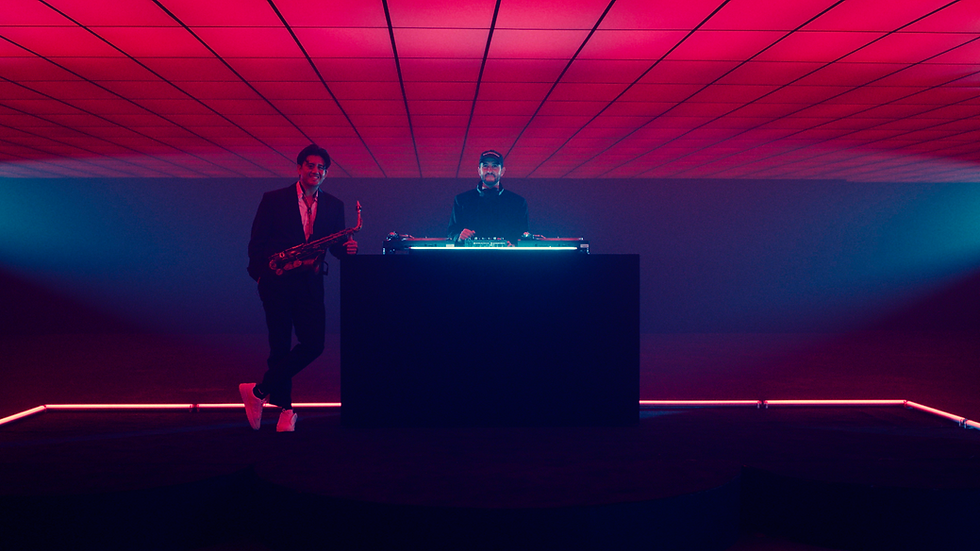
DJ with solo instrumentalist represents the most streamlined fusion configuration, pairing one live musician with DJ's complete production setup. This approach delivers significant live music impact from minimal additional investment and footprint beyond standard DJ services. Solo instrumentalists—typically saxophone, violin, guitar, or percussion—perform continuously throughout the DJ's set, adding live layers without requiring the coordination challenges that full bands present.
The solo musician floats freely over DJ's foundation, improvising solos, playing melodic lines, or adding rhythmic elements that transform familiar tracks into unique performances. This flexibility means the musician adapts dynamically to whatever music the DJ plays, creating spontaneous moments rather than requiring pre-arranged songs. The result feels organic and responsive rather than rehearsed and predictable.
DJ with two musicians expands possibilities substantially by adding harmonic and melodic interplay between performers. Common two-musician combinations include saxophone and violin (covering both melodic beauty and rhythmic punch), dual saxophones (alto and tenor creating harmonic richness), or guitar and percussion (adding both melodic and rhythmic complexity). These duos create fuller sound while maintaining the flexibility and spontaneity that characterizes fusion entertainment.
Two musicians also allow strategic deployment throughout your celebration—perhaps one performs during cocktail hour while the DJ sets up, then both join for reception dancing, creating progressive energy build without requiring separate entertainment bookings. This flexibility maximizes value from your entertainment investment while ensuring continuous live music presence.
DJ with trio or small band (3-4 musicians) approaches traditional band territory while maintaining DJ foundation and flexibility. These configurations might feature saxophone, trumpet, and trombone for horn section punch, or guitar-bass-drums for full band feel. The DJ still controls overall flow, song selection, and production, but the larger ensemble provides substantial live music presence during peak moments.
This approach often works best when deployed strategically—perhaps DJ with solo instrumentalist for early reception, then the full ensemble joins for prime dancing hours, then scaling back to DJ only for late-night after hardcore partiers remain. This progression manages energy and budget while providing impressive live music during crucial moments.
DJ with full band for late-night sets represents premium fusion where full band performs alongside DJ during specific high-energy portions of reception. The After Hours Band concept exemplifies this approach—DJ maintains control of flow and song selection while full band delivers live energy, then band takes breaks while DJ maintains momentum seamlessly. This configuration eliminates the energy dips traditional bands create between sets.
Some couples book full band for ceremony and cocktails in traditional format, then transition to DJ-band fusion for reception dancing, combining the best of both approaches. This progression feels natural—classical elegance during ceremony, refined sophistication during cocktails, then explosive fusion energy for dancing.
Choosing appropriate configuration depends on multiple factors: budget (solo instrumentalist costs significantly less than full band), venue size and acoustics (small spaces suit solo musicians better than large ensembles), guest count (intimate gatherings don't need full band impact), and desired energy level (some couples want continuous high energy requiring larger ensembles, others prefer elegant restraint from solo musicians).
Consider your reception timeline too—very long receptions (5+ hours) benefit from varied configurations that progress throughout the night. Shorter receptions might maintain consistent configuration without feeling repetitive. Very late-night parties often scale down to DJ-only after band members reasonably want to wrap.
The beauty of fusion entertainment lies in its flexibility—you're not locked into single entertainment format throughout your celebration. Work with entertainment agencies offering multiple fusion configurations, allowing you to design progression that matches your specific vision and budget while ensuring non-stop quality entertainment.
Let's talk about your wedding—reach out here.
DJ with Saxophone: The Most Popular Fusion Choice
DJ with live saxophone represents the most requested fusion configuration for excellent reasons: the saxophone's versatility across genres, its visual and sonic impact, and the relatively streamlined production compared to larger ensembles make it ideal for most wedding receptions. Understanding why this combination works so effectively helps you appreciate its value and determine if it suits your celebration.
Sonic versatility makes saxophone perfect for fusion entertainment since it complements virtually every musical genre. The instrument works beautifully over pop, rock, R&B, funk, Latin, jazz, and even electronic dance music. A skilled saxophonist seamlessly transitions between genres as the DJ changes tracks, adding melodic lines to ballads, rhythmic riffs to uptempo tracks, and improvised solos that elevate familiar songs into unique performances.
This genre flexibility particularly matters for weddings where guest demographics span generations and musical preferences vary widely. The same saxophonist who adds jazzy sophistication to Sinatra during dinner delivers energetic funk riffs over Bruno Mars for dancing, then layers beautiful melody over contemporary ballads during slow dances. This adaptability ensures the live musician remains relevant and impactful regardless of what the DJ plays.
Visual appeal of saxophone performance creates dynamic entertainment spectacle that guests genuinely enjoy watching. The saxophonist's physical engagement—moving with the music, the instrument's distinctive silhouette, the visible breath control and fingering technique—adds theatrical element that static DJ booths cannot provide. Guests naturally watch skilled musicians perform, creating entertainment beyond just audio experience.
Many saxophonists enhance visual impact through deliberate performance elements: moving around the dance floor bringing music directly to guests, coordinating movements with the music's energy, or engaging with dancers creating interactive moments. This showmanship suits wedding celebrations where entertainment should feel engaging and participatory rather than purely background.
The saxophone's tonal range spans from sultry low notes to soaring highs, allowing one instrument to cover melody, harmony, and rhythmic elements depending on musical context. Alto saxophones deliver bright, cutting tones perfect for melodic lines and energetic riffs. Tenor saxophones offer warmer, fuller sound ideal for soulful solos and rhythmic grooves. Some saxophonists bring both, switching instruments based on song and desired effect.
This range means DJ-sax combinations maintain interest throughout extended performances without feeling monotonous. The saxophonist varies approach continuously—laying back with subtle harmonies during some songs, then featuring prominently with extended solos during others, creating dynamic ebb and flow that keeps entertainment fresh.
Song selection flexibility with DJ-sax combinations far exceeds traditional band capabilities. The DJ accesses thousands of songs while the saxophonist improvises appropriate parts over whatever plays. This spontaneity allows taking guest requests without limitation—if someone wants an obscure track the band doesn't know, the DJ plays it while the saxophonist adds live elements on the fly. This responsiveness creates moments traditional bands cannot replicate.
The combination particularly excels during key wedding moments. First dances gain romantic elegance when live saxophone interprets melody over DJ's perfectly mixed backing track.
Parent dances feel more personal and emotional with live musician adding authentic performance. Grand entrances and special moments benefit from saxophone's ability to build energy and create celebratory atmosphere.
Production efficiency makes DJ-sax combinations practical for most venues and budgets. One additional musician adds minimal footprint to DJ setup—the saxophonist needs modest space, no additional sound system beyond what DJ already provides, and straightforward coordination. This simplicity means fewer technical challenges, quicker setup, and easier venue accommodation compared to larger ensembles.
The cost-value proposition of DJ-sax proves compelling—you gain substantial live music impact from relatively modest additional investment beyond DJ fees. While this costs more than DJ alone, the elevation in experience and guest perception significantly exceeds the incremental cost. Most couples find DJ-sax combinations deliver better value than paying for mediocre full band.
Coordination between DJ and saxophonist requires professional experience to execute seamlessly. The best fusion teams have performed together repeatedly, developing intuitive understanding of how to complement each other. The DJ monitors when to feature the saxophonist prominently versus when to let them lay back, while the saxophonist reads DJ cues about energy level and musical direction. This chemistry distinguishes professional fusion acts from awkward attempts at combining DJ and musician.
When selecting DJ-sax combinations, request videos showing actual wedding performances to assess both musical quality and visual presentation. Watch how saxophonist engages with guests, how seamlessly they coordinate with DJ, and whether their performance style matches your desired aesthetic. The best fusion acts make it look effortless, but that effortlessness comes from experience and professional chemistry.
Questions about your celebration? We're here to help.
DJ with Violin: Elegant Energy for Upscale Celebrations
DJ with live violin creates sophisticated fusion that appeals to couples valuing elegance and artistry alongside contemporary entertainment energy. This combination delivers refined aesthetic perfect for upscale weddings while maintaining the musical versatility and production quality that DJs provide. Understanding how violin-DJ fusion differs from saxophone combinations helps you determine if this elegant approach suits your celebration.
Sophisticated visual aesthetic distinguishes violin fusion from other configurations. The violin's classical associations, the elegant bow work, and the instrument's refined silhouette create upscale ambiance that appeals to couples emphasizing sophistication over party energy. A formally dressed violinist performing alongside modern DJ equipment creates striking visual contrast that signals "this is an elevated celebration."
This aesthetic particularly suits black-tie weddings, luxury hotel ballrooms, historic estates, and celebrations where refined elegance matters more than high-energy party atmosphere. The combination maintains dance floor energy while projecting sophistication that pure DJ setups or even DJ-sax combinations might not achieve at the same level.
Melodic focus characterizes violin performances in fusion contexts. While saxophones often emphasize rhythmic riffs and energetic solos, violins typically provide soaring melodic lines, harmonic beauty, and emotional interpretation that adds romantic element to celebrations. This melodic emphasis works beautifully for first dances, ceremony music, cocktail hours, and romantic moments where lyrical beauty matters more than rhythmic drive.
However, skilled electric violinists prove remarkably versatile, delivering energetic performances over uptempo tracks when appropriate. Electric violins with effects processing can create contemporary sounds that work over electronic dance music, pop, and rock while maintaining the instrument's inherent elegance. This versatility allows violin fusion to work across diverse musical contexts rather than limiting to purely classical or romantic material.
Genre considerations for violin fusion lean toward styles where melodic beauty enhances the music effectively. Violin works spectacularly over:
Classical crossover and contemporary classical arrangements
Romantic ballads and love songs where melody matters most
Pop music with strong melodic hooks that violin can interpret
Electronic dance music where violin adds organic contrast to synthetic sounds
Jazz standards and sophisticated dinner music
Folk and Americana where violin's acoustic character complements rustic aesthetics
Violin proves less effective over heavy rock, aggressive hip-hop, or music where rhythmic elements dominate melody. For celebrations emphasizing these genres, saxophone or guitar fusion might serve better. However, for upscale weddings focusing on elegance and romantic energy, violin fusion delivers unmatched sophistication.
Acoustic versus electric violin represents crucial decision affecting sound and aesthetic. Acoustic violins produce warm, organic tone perfect for ceremony music, cocktail hours, and romantic reception moments. However, acoustic violins struggle with volume in large venues or during high-energy dancing, potentially getting lost in the mix despite amplification efforts.
Electric violins solve volume and versatility challenges through direct amplification and effects processing. These instruments cut through DJ sound systems effectively, maintain consistent volume across dynamic ranges, and allow effects like reverb, delay, or even distortion that create contemporary sounds. Electric violins suit reception dancing better than acoustic, though purists sometimes prefer acoustic violin's organic character for ceremony and cocktail hour elegance.
Some fusion acts use both strategically—acoustic violin for ceremony and early reception, then switching to electric for dancing. This progression maintains appropriate sound for each celebration segment while maximizing violin's effectiveness across contexts.
Repertoire flexibility with violin fusion proves substantial when working with skilled musicians. Classical violinists bring technique and musicianship but might lack contemporary music knowledge. Contemporary electric violinists understand pop, rock, and electronic music but might not deliver classical repertoire with scholarly accuracy. The best fusion violinists bridge both worlds, performing Vivaldi for ceremony then seamlessly transitioning to Coldplay arrangements for reception.
This versatility matters enormously for couples wanting comprehensive violin presence throughout their celebration. Rather than booking separate classical violinist for ceremony and DJ for reception, violin-DJ fusion provides continuous refined musical presence from ceremony prelude through reception's final moments.
Coordination requirements for violin fusion demand sophisticated musicianship and experience. Unlike saxophonists who often improvise freely over DJ tracks, violinists typically learn arrangements of specific songs, practicing how melodic lines integrate with recorded backing tracks. This preparation requires selecting songs in advance, providing reference tracks to violinist, and allowing adequate rehearsal time.
However, skilled fusion violinists also improvise appropriately, adding flourishes and variations rather than robotically reproducing learned parts. The best balance combines prepared arrangements for key songs (first dance, special moments) with improvised flexibility for spontaneous requests and unexpected musical directions.
Visual performance considerations affect how violin fusion presents aesthetically. Violinists might perform from stationary position near DJ booth, creating elegant focal point. Others move through venue bringing music to different areas, creating interactive experience. Some coordinate movements with music's energy, adding choreographed element that enhances visual appeal.
Discuss performance style with potential violin fusion acts, ensuring their approach matches your aesthetic preferences. Formal, restrained performance suits some celebrations while dynamic, interactive approaches work better for others. The violinist's attire, instrument choice (traditional wood versus modern electric), and overall presentation should align with your celebration's character.
Cost comparison between violin and saxophone fusion generally runs similar, though premium classically-trained violinists sometimes command higher rates than saxophonists. Electric violins require different equipment than acoustic, potentially affecting pricing. However, for most professional fusion acts, the cost difference between instruments matters less than the musicians' skill level and experience.
The value proposition remains compelling—adding live violin to DJ services elevates the entire entertainment experience significantly for relatively modest incremental investment. For couples prioritizing elegance and sophistication over maximum party energy, violin fusion often delivers better aesthetic alignment than saxophone despite comparable costs.
Want personalized recommendations? Contact our team.
DJ with Full Band: Late Night Entertainment Perfected
DJ with full band fusion represents the ultimate wedding entertainment configuration, combining DJ's production capabilities with complete band's live energy for non-stop music that maintains peak excitement without the lulls traditional bands require. Understanding how this premium approach works and when it makes sense helps you determine if this investment aligns with your celebration vision.
The late-night advantage drives most DJ-band fusion bookings. Traditional bands require breaks between sets—musicians need rest, vocalists need to preserve voices, and energy naturally dips during these pauses. Even when bands provide playlist music during breaks, the shift from live performance to recorded tracks disrupts momentum and clears dance floors partially or completely.
DJ-band fusion eliminates these energy dips entirely. When the band takes breaks, the DJ maintains full energy and production quality—not just background music but continued high-energy performance that keeps dancers engaged. When the band performs, they deliver authentic live music impact. The result is seamless entertainment progression where guests never experience the awkward transition from live to recorded music.
This advantage particularly matters for high-energy receptions emphasizing continuous dancing. If keeping your dance floor packed from first dance through last call matters significantly, DJ-band fusion delivers better results than traditional bands regardless of those bands' quality. The uninterrupted energy flow creates party atmosphere that builds continuously rather than cycling up and down with band breaks.
Strategic deployment maximizes DJ-band fusion value through thoughtful scheduling. Common approaches include:
Progressive build approach: DJ performs solo during cocktail hour and dinner, establishing energy and warming up the crowd. Band joins for first dance and prime dancing hours (typically 9 PM-11 PM), delivering peak live energy when most guests are dancing. DJ continues solo for late-night after hardcore partiers remain and band wraps.
Alternating sets approach: Band and DJ alternate 30-45 minute sets throughout reception. Band performs a set while DJ prepares the next one, then DJ takes over while band rests. This rotation maintains constant live presence while managing musician fatigue and vocal strain.
Hybrid performance approach: DJ and band perform simultaneously during peak hours, with DJ controlling overall flow and production while band layers live instruments and vocals. This creates richest sound but requires sophisticated coordination and experience.
The specific approach depends on your reception timeline, budget, and which configuration delivers your desired atmosphere most effectively.
Musical versatility with DJ-band fusion exceeds what traditional bands achieve even when those bands maintain extensive repertoires. The DJ component provides unlimited music access, playing literally any song that exists while the band focuses on what they perform best. This division of labor optimizes both elements rather than forcing bands to stretch beyond their strengths.
For example, if a guest requests obscure 90s hip-hop track the band doesn't know, the DJ plays it seamlessly. If you want authentic Motown energy with horns and powerful vocals, the band delivers that perfectly. Each component handles what it does best, creating comprehensive entertainment that addresses all musical preferences without compromise.
This versatility particularly benefits multi-generational celebrations where musical preferences span decades and genres. Traditional bands serving diverse crowds often end up satisfying nobody completely—playing watered-down versions of various styles rather than excelling at anything specific. DJ-band fusion allows authentic execution across all genres through appropriate division of labor.
The band's role in fusion contexts often focuses on premium impact during crucial moments rather than providing continuous entertainment. Bands might perform your grand entrance with maximum fanfare, deliver live first dance performance, handle key reception moments, and create explosive dance floor energy during peak hours. Meanwhile, DJ handles background music, transitions, and segments where band presence isn't necessary.
This strategic use means you're paying for full band only when their impact justifies the cost, while DJ efficiently covers moments where recorded music serves adequately. The combination delivers premium experience overall without the expense of booking full band for continuous entertainment when that level isn't necessary.
Coordination complexity increases significantly with DJ-band fusion compared to simpler solo instrumentalist configurations. Multiple musicians, DJ equipment, larger stage footprint, and more complex sound requirements demand professional planning and execution. The band and DJ must coordinate seamlessly on song selection, timing, transitions, and technical integration.
Professional fusion teams with experience performing together navigate these complexities smoothly. They've developed workflows ensuring clean transitions, understand how to share stage space effectively, and coordinate sound reinforcement so both DJ and band sound optimal without interfering with each other. This chemistry distinguishes professional fusion acts from awkward attempts at combining separate DJ and band.
Technical requirements for DJ-band fusion exceed simpler configurations substantially. You need adequate stage space for full band plus DJ equipment, sufficient electrical infrastructure for both setups, and sound systems that accommodate both elements without feedback or interference. Some venues struggle with these requirements, making DJ-band fusion impractical despite its appeal.
Discuss technical needs specifically with your venue and entertainment team early in planning. Ensure your venue can accommodate the equipment footprint, power requirements, and acoustic challenges that full fusion presents. Some venues handle this effortlessly; others would require rental of additional equipment or infrastructure making the configuration prohibitively complex.
Cost considerations for DJ-band fusion run significantly higher than DJ-only or DJ-with-solo-instrumentalist options. You're paying for full band plus premium DJ services, though typically less than booking band and DJ separately since they're integrated entertainment rather than separate acts. The investment makes sense for couples prioritizing non-stop high-energy entertainment and refusing to compromise on quality.
Consider this premium option if your celebration emphasizes dancing above all else, if you're hosting large reception (150+ guests) where full band impact suits the scale, if your venue can accommodate the technical requirements comfortably, and if your budget allows without sacrificing other priorities. For these celebrations, DJ-band fusion delivers unmatched entertainment value despite higher cost.
When Fusion Makes More Sense Than Traditional Bands
Understanding specific scenarios where DJ-musician fusion represents superior choice rather than compromise helps couples make confident entertainment decisions aligned with their celebration's character. Certain circumstances strongly favor fusion over traditional bands regardless of those bands' quality.
Unlimited music variety requirements make fusion the obvious choice when couples cannot limit song selection to band repertoires. Traditional bands maintain 150-300 song lists despite claims of larger libraries. Even versatile bands cannot authentically perform every genre and era equally well. DJ-musician fusion eliminates these limitations entirely—the DJ plays literally anything while musicians add live elements where appropriate.
This matters most for couples with diverse, specific musical preferences. Perhaps you love 80s new wave, your partner adores 90s hip-hop, and your parents want Motown and country. Traditional bands serving this range often disappoint everyone with mediocre approximations. Fusion delivers authentic versions of each genre with live musical enhancement creating elevated experience across all styles.
Multi-generational celebrations with widely varied guest demographics benefit enormously from fusion's flexibility. Grandparents dismissing DJs as "not real music" appreciate live musicians performing. Younger guests bored by traditional wedding bands enjoy contemporary DJ mixing and current hits played authentically. Fusion satisfies everyone simultaneously rather than alternating between demographics' preferences or forcing compromise that pleases nobody completely.
Continuous energy requirements favor fusion decisively over traditional bands. If maintaining packed dance floor from first dance through last call matters more than anything else, fusion's elimination of energy-killing band breaks delivers better results than even excellent traditional bands. The seamless transition between live and DJ performance maintains momentum that traditional bands structurally cannot match.
This particularly matters for couples who've attended weddings where dance floors clear during band breaks and never fully recover. Once guests sit down, getting them dancing again requires restarting momentum from scratch. Fusion prevents this problem entirely through uninterrupted entertainment flow.
Budget-conscious couples wanting live music elements often achieve better value with DJ-solo instrumentalist fusion than stretching budgets for mediocre full bands. An excellent DJ with skilled saxophonist costs significantly less than average full band while delivering superior musical variety and reliability. Rather than paying for adequate large band, investing in premium fusion often provides more impressive entertainment value.
The key is honest assessment of priorities. If live instrumentation's visual appeal and authentic sound matter but you need DJ versatility and reliability, fusion delivers both at moderate price point between DJ-only and full-band options.
Venue limitations sometimes make fusion practical where full bands prove challenging. Venues with limited stage space, restricted volume ordinances, challenging load-in logistics, or tight timeline constraints often accommodate DJ-musician fusion more easily than full bands' substantial footprint and requirements. The flexibility in fusion configurations allows adapting to venue constraints while maintaining quality live entertainment presence.
Late-night party continuation suits fusion perfectly since one or two musicians can maintain live elements while DJ handles overall control as celebration extends past traditional end times. Traditional bands wanting reasonable wrap times leave you choosing between ending the party or transitioning awkwardly to DJ-only for late-night. Fusion maintains consistent entertainment approach throughout without abrupt format changes.
Risk-averse couples concerned about band reliability sometimes prefer fusion's built-in contingency. If live musician cannot perform due to illness or emergency, DJ continues providing quality entertainment rather than the disaster of cancelled band. While professional agencies maintain backup musicians, the DJ component provides insurance that traditional bands lack structurally.
Contemporary aesthetic preferences often align better with fusion than traditional bands. Couples wanting modern, sleek entertainment rather than classic band presentation find DJ equipment's visual aesthetic more appealing. Adding one or two musicians creates live element without the full band stage setup that might feel dated or overly production-heavy for their vision.
Specific musical moments requiring live performance work perfectly in fusion contexts. Perhaps you want live musician for your first dance and parent dances but prefer DJ for general dancing. Or you want saxophone energy during prime dancing hours but not continuous live performance all night. Fusion allows deploying live musicians strategically for maximum impact rather than committing to full-band format throughout entire reception.
Understanding these scenarios helps you recognize when fusion isn't compromise but rather optimal solution for your specific needs. Don't default to traditional bands assuming they're superior—evaluate what you actually need and whether fusion delivers better results for your celebration's unique character and priorities.
Ready to create your perfect entertainment experience? Contact us and let's design the ideal fusion configuration for your celebration.
The Cost-Value Proposition of DJ Musician Fusion
Understanding fusion entertainment's financial considerations helps couples make informed decisions balancing budget realities with entertainment quality priorities. DJ-musician fusion occupies middle ground between DJ-only and full-band costs, but the value equation extends beyond simple price comparison.
Base cost structure for fusion entertainment typically adds live musician fees to DJ services. A quality DJ might run certain investment levels, with each additional musician adding incremental costs. Solo instrumentalist fusion (DJ plus saxophone or violin) costs moderately more than DJ alone—perhaps 30-50% premium. DJ with small ensemble (2-3 musicians) approaches mid-tier full band pricing. DJ with full band rivals or exceeds premium traditional band costs.
However, these direct comparisons miss crucial value differences. DJ-musician fusion delivers capabilities that traditional bands cannot—unlimited music variety, seamless transitions, continuous energy, and production quality beyond typical wedding band setups. You're not paying more for equivalent service; you're paying for genuinely superior entertainment in specific dimensions that matter enormously to many couples.
Value optimization comes from matching fusion configuration to your specific needs rather than maximizing live musicians because "more is better." A couple whose priorities emphasize musical variety and continuous energy often gains more value from DJ plus skilled saxophonist than from stretching budget for mediocre eight-piece band. The fusion delivers what matters most (variety, energy) while the full band might excel at things they care about less (visual production, traditional presentation).
Strategic deployment maximizes fusion value further. Perhaps book DJ with solo instrumentalist for the full reception, then add full band for just the final high-energy hour. This approach provides impressive late-night impact without paying for full band throughout entire event. The flexibility in fusion configurations allows creative solutions optimizing both budget and experience.
Hidden cost savings sometimes favor fusion over traditional bands. Fusion often requires less stage space potentially reducing venue rental costs. Setup and breakdown times run shorter benefiting venues charging hourly. Technical requirements might be simpler depending on configuration. Vendor meals for DJ plus one musician cost less than feeding eight-piece band. These incremental savings accumulate meaningfully.
Reliability and contingency value factors into cost considerations since fusion entertainment provides built-in backup that traditional bands lack. If live musician cannot perform, DJ continues delivering quality entertainment rather than catastrophic band cancellation. This insurance value—though hard to quantify—matters significantly for risk-averse couples investing substantial amounts in entertainment.
Professional entertainment agencies charging premiums for fusion services often justify those costs through superior coordination, experienced teams, and quality assurance that independent combinations lack. Yes, you might save money hiring separate DJ and musician who've never worked together, but the performance quality and coordination often suffer significantly. Premium pricing from established agencies reflects genuine value in their teams' chemistry and experience.
Budget allocation strategy suggests viewing fusion costs relative to total entertainment needs rather than comparing narrowly to DJ-only pricing. If you'd planned to book both DJ and live musicians separately, fusion providing integrated solution often costs less than two separate bookings while delivering superior coordination. The combination pricing typically undercuts separate sourcing despite seeming expensive compared to DJ alone.
Consider also what you're not paying for when choosing fusion over traditional bands. No rehearsal space rentals, no extensive song learning fees, no band travel logistics for out-of-town musicians, and often simpler technical requirements than full bands demand. These avoided costs offset some of fusion's premium over DJ-only options.
Long-term value in guest experience and wedding memories justifies fusion investment for many couples. Entertainment represents one of few wedding elements guests actually experience actively throughout your celebration. They might not notice exact floral arrangements or specialty linens, but they definitely notice whether entertainment kept them engaged all night. Investing in fusion that delivers exceptional experience throughout reception creates memories worth far more than incremental cost.
The regret factor weighs heavily too. Couples rarely regret investing in exceptional entertainment, but many regret choosing mediocre entertainment to save money. If your budget forces choosing between upgraded fusion entertainment and decorative elements guests barely notice, prioritize what they'll actually experience and remember.
Return on investment thinking applies when considering fusion for corporate events or celebrations where entertainment quality affects professional reputation. Impressive entertainment at client appreciation events, company galas, or business celebrations creates positive associations benefiting beyond the event itself. The incremental cost of fusion over adequate entertainment pales compared to relationship and reputation value created through memorable experiences.
For weddings specifically, the "investment" mindset matters less than honest assessment of what creates the celebration you actually want. If fusion entertainment aligns with your vision and delivers the experience you're imagining, find budget by reducing elements mattering less to you. Most couples have areas where they're spending on things they don't deeply care about—reallocate those funds to entertainment you'll appreciate all night and remember forever.

Energy Flow and Programming for Fusion Entertainment
Strategic programming of fusion entertainment creates optimal energy progression throughout your celebration, building momentum naturally while keeping guests engaged from cocktail hour through final dance. Understanding how to leverage both DJ and live musician elements across your reception timeline maximizes fusion's unique advantages.
Cocktail hour programming often begins with DJ-only or DJ with understated live musician presence. This period prioritizes conversation-friendly ambiance over performance spectacle. The DJ plays sophisticated background music—perhaps jazz, bossa nova, or acoustic pop—at volumes encouraging mingling. If live musicians perform during cocktails, they maintain subtle presence rather than commanding attention.
This restraint creates contrast for what follows. When guests transition from cocktails to reception, the elevation in music energy and live musician prominence signals celebration is ramping up. Starting too intensely during cocktails leaves nowhere to build, while beginning subtly allows dramatic energy increase as reception progresses.
Grand entrance and first dance benefit enormously from strategic live musician deployment. Perhaps DJ handles grand entrance announcements and music, then live musicians feature prominently for your first dance—violin interpreting melody beautifully over DJ's perfectly mixed backing track, or saxophonist adding romantic flourishes. This spotlight moment showcases live musicians' emotional impact while DJ maintains production quality.
Parent dances and special moments similarly benefit from live musician emphasis. The authentic performance during these intimate moments creates genuine emotional resonance that recorded tracks cannot match, even when DJ provides backing. Guests recognize and appreciate the special musical treatment given to these significant moments.
Dinner service programming maintains pleasant energy without demanding dance floor attention. DJ plays dinner-appropriate material while live musicians either take a break or perform understated accompaniment. This segment prioritizes conversation and meal enjoyment, with music enhancing atmosphere rather than commanding focus. Building too much energy during dinner creates awkward situation where guests want to dance while trying to eat.
As dinner concludes, programming gradually increases energy. The DJ begins incorporating more uptempo material, and live musicians return (if they took dinner break) with increased prominence. This progression signals dancing is approaching without jarring transition from quiet dinner to full party mode.
Dance floor opening requires careful programming that draws initial dancers without overwhelming hesitant guests. The DJ-musician combination excels here by opening with accessible, mid-tempo favorites that confident dancers recognize while live musician adds excitement making the songs feel special. This combination draws more initial dancers than DJ-only or traditional band approaches.
The first 20-30 minutes of dancing are crucial—these set the dance floor tone for your entire reception. Fusion entertainment's ability to seamlessly flow through varied styles while maintaining live energy helps build participation progressively rather than hoping right song suddenly fills the floor.
Peak energy programming (typically 90 minutes to 2 hours after dancing begins) leverages fusion's full capabilities. Live musicians perform prominently, adding maximum energy and visual appeal. DJ drops crowd favorites while musicians solo over tracks, creating explosive moments impossible for either element alone. The combination of DJ's seamless mixing with live musician energy creates genuinely exciting entertainment that keeps floors packed.
This segment allows showcasing fusion's unique advantages. The DJ can transition between songs without pauses, maintaining momentum that traditional bands cannot match. Meanwhile, live musicians provide the authentic energy and visual appeal that pure DJ setups lack. Together, they create "best of both worlds" experience that justifies fusion's investment.
Energy management throughout this peak period prevents exhaustion. Even during high-energy segments, strategic placement of slightly lower-tempo songs allows guests catching breath without completely clearing the floor. The fusion team monitors crowd energy, adjusting tempo and intensity responsively rather than plowing forward regardless of guest fatigue.
Late-night programming often scales back live musician prominence as hardcore dancers remain and others depart. Perhaps full band wraps while DJ with solo instrumentalist continues, or DJ goes solo for very late celebration continuation. This scaling matches remaining crowd size and energy appropriately while managing costs and musician schedules reasonably.
Some receptions maintain full fusion through absolute end if that's what you want and budget allows. Others appreciate natural wind-down as live musicians wrap, signaling party conclusion approaching while DJ provides graceful ending. Neither approach is inherently better—choose based on your specific celebration timeline and guest demographics.
Transitions between modes require seamless execution preventing awkward gaps. When live musicians take breaks, DJ maintains full energy and production rather than dropping to background mode. When musicians return, the transition feels natural rather than jarring. Professional fusion teams make these shifts imperceptible to guests through experience and coordination.
Spontaneous adjustments throughout your reception leverage fusion's flexibility. If older guests depart earlier than expected, programming can shift toward contemporary material and higher energy sooner. If a particular song or style gets huge response, the team can extend that energy rather than strictly following predetermined setlist. This responsiveness optimizes entertainment for your specific celebration's unique dynamics.
The key to successful fusion programming is strategic thinking about how different elements deploy throughout your timeline rather than just having DJ and musicians perform simultaneously all night. Thoughtful progression, appropriate restraint when needed, and explosive energy during peak moments create better overall experience than constant maximum intensity from start to finish.
Questions about programming your fusion entertainment? We're here to help.
Musical Versatility: Genre Flexibility That Bands Cannot Match
The unlimited musical versatility of DJ-musician fusion represents perhaps its most compelling advantage over traditional wedding bands. Understanding how this flexibility manifests practically helps couples appreciate fusion's unique capabilities beyond theoretical possibilities.
Genre authenticity distinguishes fusion from traditional bands attempting to serve all styles. Wedding bands often play watered-down versions of songs outside their specialty—rock bands performing weak hip-hop, pop bands delivering mediocre country, or generic groups excelling at nothing while attempting everything. Their 200-song repertoires force choosing songs they know rather than songs you love.
DJ-musician fusion eliminates these limitations entirely. Want authentic 90s hip-hop exactly as recorded? The DJ plays the original track. Want live energy added? The saxophonist or percussionist layers live elements appropriately. The result is authentic hip-hop with live enhancement rather than band's awkward approximation. This approach maintains musical integrity across all genres rather than forcing everything through band filter.
This authenticity matters enormously for couples with strong musical preferences or diverse guest demographics. Your celebration can feature authentic Motown, genuine Latin rhythms, real country classics, and current electronic dance music all performed properly rather than filtered through band's limited capabilities. Each genre sounds right rather than vaguely approximated.
Spontaneous requests work seamlessly with fusion since the DJ can play literally any song immediately. Traditional bands either decline requests they don't know or deliver poor approximations. Fusion accommodates all reasonable requests—if the DJ has it (which professionals have virtually everything), it plays with live musician adding appropriate elements on the fly. This responsiveness creates guest satisfaction impossible for traditional bands.
Cultural music diversity benefits from fusion's flexibility when honoring multiple heritages. Perhaps you need authentic Jewish hora music, Latin salsa rhythms, Indian Bollywood hits, and contemporary American pop throughout one celebration. Traditional bands struggle serving this range authentically. Fusion plays proper recordings of each style while live musicians add appropriate energy where it enhances rather than detracts.
Obscure favorites and deep cuts become accessible with fusion. Maybe you love specific album tracks, B-sides, or indie songs that wedding bands never know. With fusion, your obscure favorites play alongside mainstream hits—the DJ has everything while musicians focus on adding live elements to popular songs where impact is greatest. You're not forced to choose only from band's standard repertoire or skip songs you love.
Era versatility allows authentic representation across decades. 40s swing, 60s Motown, 70s disco, 80s new wave, 90s grunge, 2000s hip-hop, and current pop all sound authentic rather than homogenized through band interpretation. This matters for multi-generational celebrations where honoring different eras authentically creates inclusive environment.
Professional recordings maintain production quality that live bands rarely match. The original recordings feature world-class production, perfect mixing, and sonic polish that even excellent wedding bands cannot replicate in live settings. Fusion gives you that studio quality plus live energy rather than choosing between them.
Volume and mix control allows precise management impossible for acoustic bands. The DJ adjusts every element's volume independently, ensuring perfect balance between live musician and backing tracks. Vocals never get buried, bass never overwhelms, and overall mix stays optimal regardless of venue acoustics. This control maintains quality across diverse spaces and conditions.
The combination of unlimited song access, authentic genre representation, spontaneous request accommodation, and professional production quality creates versatility that traditional wedding bands simply cannot match regardless of skill or repertoire size. For couples valuing musical variety and authenticity, fusion delivers unmatched capabilities.
Want to explore fusion options? Contact our team for personalized recommendations.
Visual Impact: Why Guests Love Watching Fusion Performances
Live musicians performing alongside DJ equipment creates dynamic visual entertainment that engages guests beyond pure audio experience. Understanding fusion's visual appeal helps couples appreciate how this entertainment style creates memorable moments through both sight and sound.
Movement and energy from live musicians adds theatrical dimension missing from DJ-only setups. Saxophonists moving with music, violinists' expressive bow work, or guitarists' visible technique creates visual interest that static DJ booths cannot provide. Guests naturally watch skilled performers, transforming entertainment from background audio into captivating performance art.
Interactive moments happen naturally when musicians engage with dancing guests. A saxophonist might play directly to dancers, move through the crowd bringing music to different areas, or create spontaneous musical interactions that guests remember vividly. This accessibility and interaction makes entertainment feel personal and engaging rather than distant performance.
The contrast between modern DJ equipment and traditional live instruments creates visually interesting aesthetic. The sleek technology of DJ booth alongside organic beauty of acoustic instruments represents perfect visual metaphor for fusion concept—contemporary and traditional elements complementing rather than competing.
Lighting and production enhance visual impact when properly coordinated. DJ's lighting synchronized with music, spotlights featuring live musician during solos, and thoughtful stage presentation create concert-level visuals scaled appropriately for weddings. This production quality elevates entire celebration's sophistication without overwhelming intimate moments.
Professional DJ and live music fusion teams understand visual presentation matters nearly as much as audio quality. They coordinate attire, positioning, movements, and overall stage presentation creating cohesive entertainment that looks as good as it sounds.
Frequently Asked Questions About Live DJs with Musicians
How much more does DJ-musician fusion cost than DJ alone?
DJ with solo instrumentalist typically costs 30-50% more than quality DJ alone. DJ with two musicians runs 50-80% more. DJ with full band approaches or exceeds traditional band pricing. However, fusion delivers capabilities neither DJs nor bands alone provide—unlimited music variety with authentic live energy. Many couples find better value in premium fusion than stretching budgets for mediocre traditional bands.
Do the DJ and musicians need to rehearse together?
Professional fusion teams with experience performing together don't require extensive rehearsal since they've developed intuitive coordination through repeated performances. However, they should discuss your specific song requests, special moments, and reception flow in advance. For key songs like first dance, some preparation ensures seamless execution. The best fusion acts make it look effortless through experience, not luck.
Can fusion work for ceremony music too?
Yes, though often with different configurations. Perhaps live musicians perform ceremony and cocktails while DJ sets up, then combining for reception. Or DJ provides ceremony sound reinforcement for live musicians, then both perform together for reception. The flexibility allows adapting to your specific needs across all celebration segments.
What if our venue is small—will fusion fit?
DJ with solo instrumentalist requires minimal space beyond standard DJ setup—just room for one additional performer. This works in virtually any venue accommodating DJ services. Larger fusion configurations need more space, potentially challenging for very compact venues. Discuss your specific venue dimensions with potential fusion teams to ensure comfortable fit.
How do musicians know what to play over DJ tracks?
Skilled fusion musicians improvise appropriately over whatever the DJ plays, adding live elements that enhance rather than conflict. For key songs, they learn specific arrangements in advance. The combination of prepared arrangements for special moments and improvised flexibility for spontaneous selections allows fusion to work across diverse musical contexts.
Is fusion appropriate for all wedding styles?
Fusion works beautifully for contemporary, modern, and upscale celebrations valuing innovation and versatility. It suits multi-generational weddings needing diverse musical appeal. Traditional or culturally specific weddings sometimes benefit more from appropriate traditional entertainment. Consider whether fusion's modern approach aligns with your overall wedding aesthetic.
Can we request specific songs for the musician to play live?
Absolutely. Provide a list of priority songs where you want prominent live musician presence—first dance, special dances, favorite songs. The musician prepares arrangements for these selections while maintaining flexibility to add live elements spontaneously to other tracks. This combination ensures key moments get special treatment while maintaining overall versatility.
Creating Your Perfect Fusion Entertainment Experience
Live DJs with musicians represent entertainment's future, solving the decades-old compromise between DJ versatility and live band authenticity. This innovative approach delivers both simultaneously—unlimited music libraries, seamless mixing, and perfect production quality combined with authentic live energy, visual appeal, and organic sound that elevates celebrations beyond what either DJs or traditional bands achieve alone.
From DJ with solo saxophone creating accessible entry into fusion through DJ with full band delivering ultimate premium entertainment, these configurations offer remarkable flexibility matching diverse budgets, venues, and celebration styles. Understanding which configuration suits your specific needs helps you invest appropriately in entertainment that delivers the experience you're envisioning.
The journey from recognizing fusion's advantages through selecting appropriate configuration, programming effective energy flow, and coordinating technical details requires thoughtful planning. But the result—entertainment that keeps every guest engaged all night through perfect balance of variety and live energy—justifies the effort and investment manyfold.
Trust that choosing fusion over traditional alternatives demonstrates forward-thinking sophistication rather than compromise or gimmick. The world's most prestigious celebrations increasingly feature DJ-musician fusion precisely because discerning couples recognize this approach delivers superior results when executed professionally by experienced teams.
Ready to experience the future of wedding entertainment? Contact us today and discover how DJ-musician fusion creates the perfect soundtrack for your celebration.
For more information about accessibility, visit our accessibility page. Explore more entertainment insights on our blog.


This was a very useful read. The balance between useful information and readability is excellent. While reading, I was reminded how difficult it can be to find good examples and practical ideas online. Not long ago I discovered https://novynypoltavy.com/, and the practical approach reminded me a lot of what you're doing here. The practical nature of the content makes it much more valuable than many similar articles online. Hope to see more articles like this in the future.